

































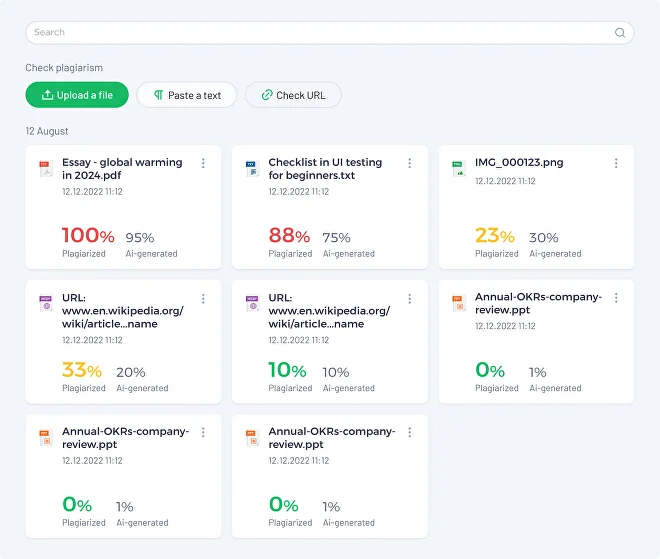

Skandy is a service dedicated to upholding academic integrity, harnessing the power of AI for effective plagiarism detection. Tailored for educational use, Skandy is trusted by thousands of teachers and prestigious universities worldwide.
Here’s why Skandy is essential for preventing plagiarism in student papers:
- Protecting student reputation and grades. Plagiarism, be it in business-content or a student work, is a serious offense, akin to fraud and theft, which can result in low scores, fines, or even expulsion from educational institutions. Students found guilty of plagiarism may suffer from a tarnished reputation and loss of trust in their future endeavours.
- Avoiding misunderstandings and conflicts. Even when students believe they’ve composed their work independently, it’s essential to check for plagiarism to prevent unintentional or self-plagiarism. Skandy provides peace of mind by ensuring the originality of their work.
Upholding university integrity. Schools and colleges place a high value on their reputation, as it directly impacts their standing within the educational community. Meeting accreditation requirements is essential for maintaining this reputation. If a school were to graduate a student guilty of plagiarism, it could lead to a damaging scandal for the institution. Consequently, educational institutions across the USA, Europe, and beyond have implemented stringent rules on academic ethics. Many schools have even integrated dedicated lessons and courses emphasising the critical importance of ensuring 100% uniqueness in student work.
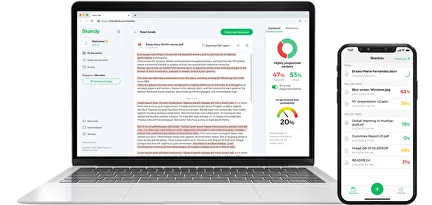
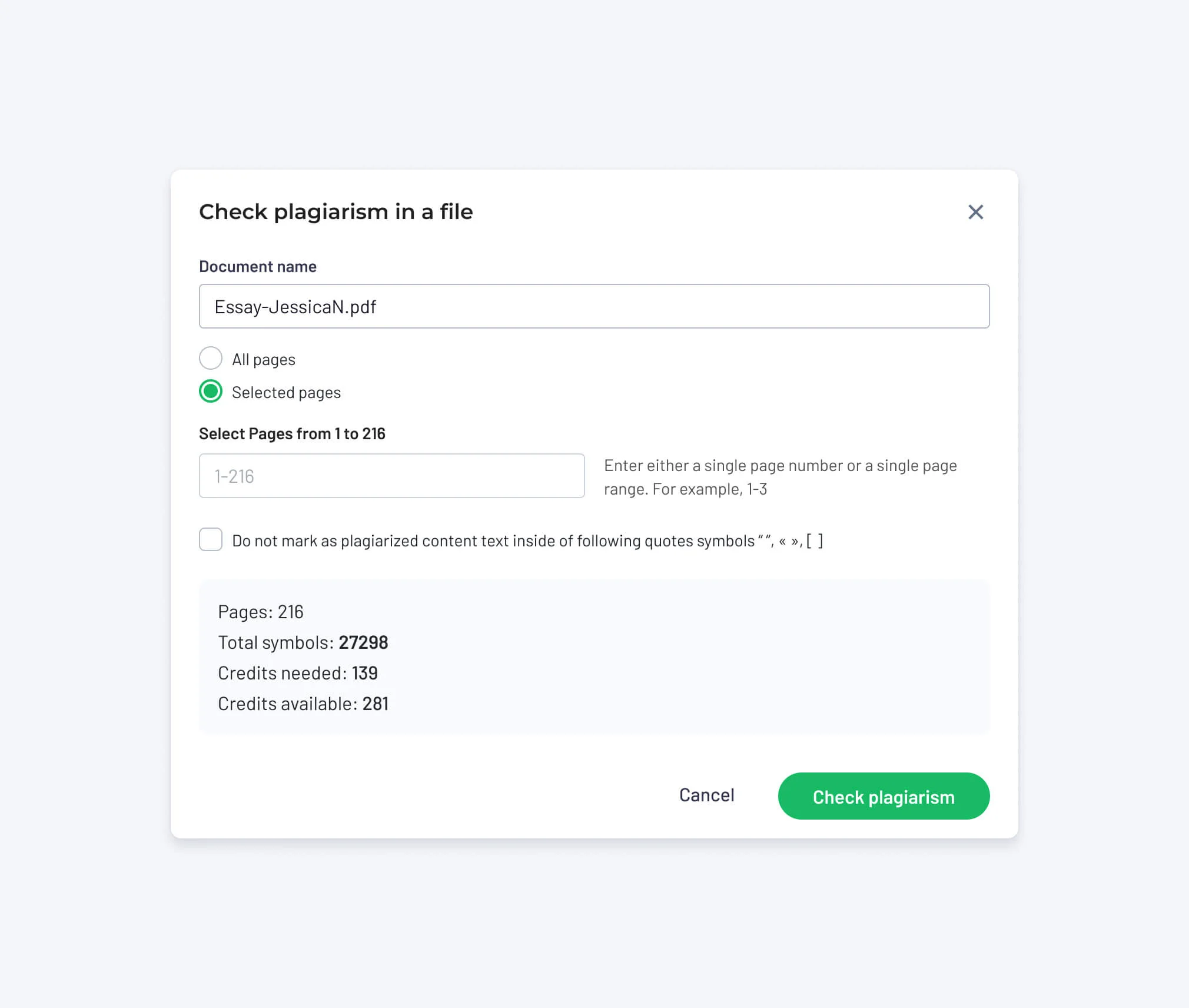
Skandy streamlines the process of checking work. After completing your work, simply upload it to Skandy in any convenient format and initiate the check. Verification typically takes two minutes or less.
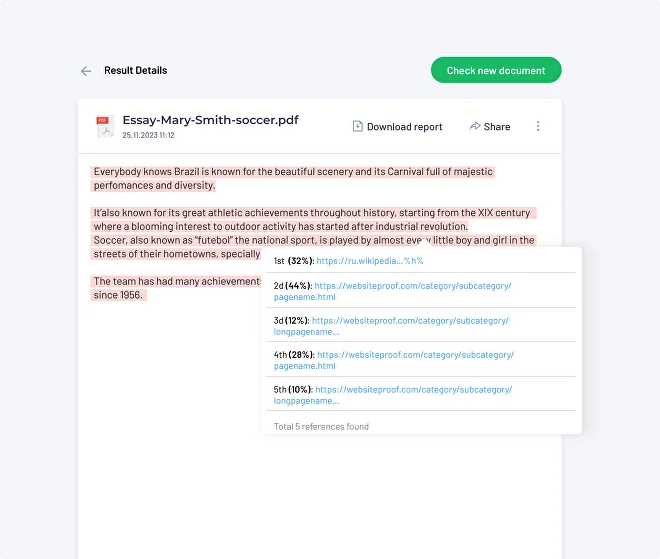
Skandy compares your text against billions of web pages and public databases, indicating the uniqueness of your work:
- If the result is 98-100%, you can confidently submit your work to your teacher.
- If the result is less than 100%, revise your text, focusing on the highlighted non-unique fragments, and correct any errors in quotation usage.